
Your heart works tirelessly every second of your life. It pumps blood, delivers oxygen, and keeps every organ functioning properly. Unfortunately, heart disease has become one of the leading health concerns worldwide due to unhealthy eating habits, stress, lack of exercise, and sedentary lifestyles.
The good news is that you can significantly improve your heart health by making smart food choices. A balanced diet rich in nutrients, antioxidants, healthy fats, and fiber can help lower cholesterol levels, regulate blood pressure, reduce inflammation, and improve overall cardiovascular function.
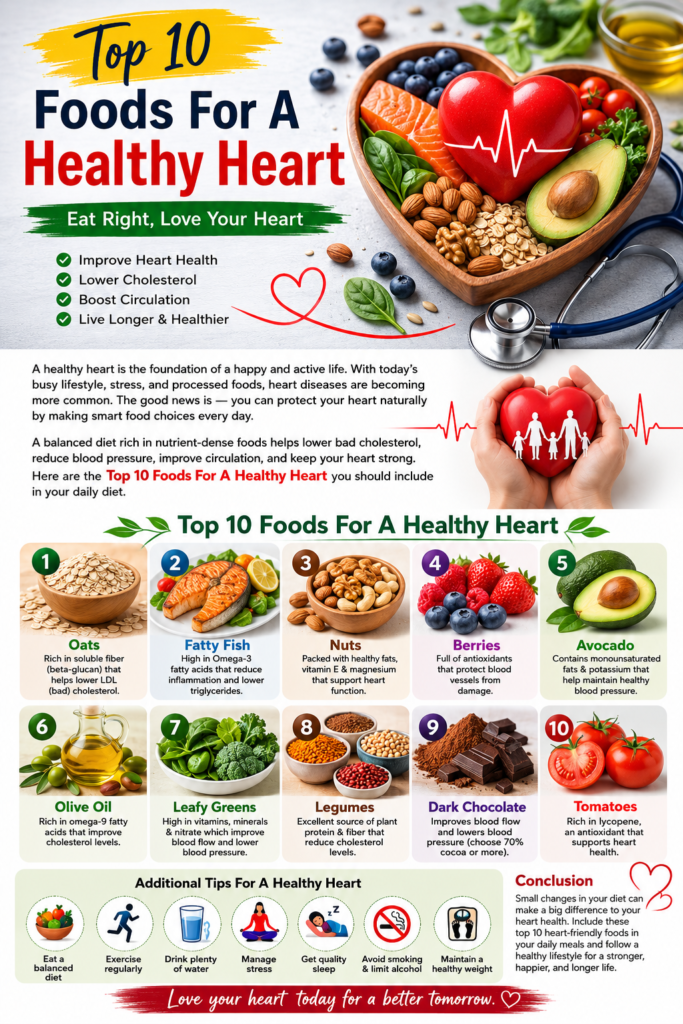
In this article, we will explore the Top 10 Foods For A Healthy Heart and explain how these superfoods can help you maintain a strong and healthy cardiovascular system naturally.
Why Heart-Healthy Foods Matter
The food you eat directly affects your heart health. Diets high in processed foods, trans fats, sugar, and excessive salt increase the risk of:
- High blood pressure
- High cholesterol
- Obesity
- Diabetes
- Stroke
- Heart attacks
On the other hand, nutrient-dense foods provide essential vitamins, minerals, fiber, and healthy fats that support heart function and reduce the risk of cardiovascular disease.
Let’s discover the best foods you should include in your daily diet.
1. Oats
Oats are one of the healthiest foods for your heart. They are rich in soluble fiber, particularly beta-glucan, which helps lower bad cholesterol (LDL) levels.
Benefits of Oats:
✔ Reduces cholesterol levels
✔ Improves digestion
✔ Helps manage blood sugar
✔ Supports weight management
How to Eat:
- Oatmeal for breakfast
- Oat smoothies
- Homemade granola
A bowl of oats every morning is an excellent start toward better heart health.
2. Fatty Fish
Fatty fish such as salmon, mackerel, sardines, and tuna are packed with Omega-3 fatty acids, which are essential for heart health.
Benefits of Fatty Fish:
✔ Reduces inflammation
✔ Lowers triglycerides
✔ Improves blood circulation
✔ Helps regulate blood pressure
How to Eat:
- Grilled salmon
- Fish curry
- Baked mackerel
Experts recommend eating fatty fish at least twice a week.
3. Nuts
Nuts like almonds, walnuts, and pistachios are loaded with healthy fats, magnesium, and antioxidants.
Benefits of Nuts:
✔ Reduces bad cholesterol
✔ Improves blood vessel health
✔ Decreases inflammation
✔ Supports healthy blood pressure
How to Eat:
- A handful of mixed nuts as snacks
- Add to salads
- Sprinkle on oatmeal
Remember to consume nuts in moderation because they are calorie-dense.
4. Berries
Blueberries, strawberries, raspberries, and blackberries are rich in antioxidants called anthocyanins, which protect your heart from oxidative stress.
Benefits of Berries:
✔ Reduces inflammation
✔ Supports healthy blood pressure
✔ Improves blood vessel function
✔ Lowers risk of heart disease
How to Eat:
- Add to yogurt
- Blend into smoothies
- Eat as a healthy snack
Berries are among the most nutrient-dense foods you can eat.
5. Avocados
Avocados are an excellent source of monounsaturated fats, which are known to improve cholesterol levels.
Benefits of Avocados:
✔ Lowers LDL cholesterol
✔ Raises good cholesterol (HDL)
✔ Rich in potassium
✔ Supports healthy blood pressure
How to Eat:
- Avocado toast
- Salads
- Smoothies
Adding avocado to your meals can greatly improve heart health.
6. Olive Oil
Extra virgin olive oil is a cornerstone of the Mediterranean diet and is famous for its heart-protective benefits.
Benefits of Olive Oil:
✔ Rich in antioxidants
✔ Reduces inflammation
✔ Lowers cholesterol
✔ Supports healthy arteries
How to Eat:
- Salad dressing
- Cooking vegetables
- Drizzle over soups
Replacing butter and refined oils with olive oil can significantly improve cardiovascular health.
7. Leafy Green Vegetables
Spinach, kale, and other leafy greens are packed with vitamins, minerals, and nitrates that improve blood circulation.
Benefits of Leafy Greens:
✔ Helps lower blood pressure
✔ Improves artery function
✔ Rich in antioxidants
✔ Supports overall heart health
How to Eat:
- Green smoothies
- Vegetable soups
- Salads
Aim to include green vegetables in your diet every day.
8. Legumes
Beans, lentils, chickpeas, and peas are excellent plant-based protein sources that promote heart health.
Benefits of Legumes:
✔ Rich in fiber
✔ Helps lower cholesterol
✔ Supports weight management
✔ Improves blood sugar control
How to Eat:
- Dal and lentil soups
- Bean salads
- Chickpea curries
Legumes are affordable, nutritious, and incredibly beneficial for the heart.
9. Dark Chocolate
Good news for chocolate lovers! Dark chocolate containing at least 70% cocoa may help improve heart health.
Benefits of Dark Chocolate:
✔ Rich in antioxidants
✔ Improves blood flow
✔ Reduces blood pressure
✔ Supports artery health
How to Eat:
- One or two small pieces daily
- Add to smoothies
- Use in healthy desserts
Moderation is the key to enjoying its benefits.
10. Tomatoes
Tomatoes are rich in lycopene, a powerful antioxidant that supports cardiovascular health.
Benefits of Tomatoes:
✔ Reduces inflammation
✔ Supports healthy blood vessels
✔ Lowers risk of heart disease
✔ Rich in vitamins C and K
How to Eat:
- Fresh salads
- Soups
- Homemade tomato sauce
Cooked tomatoes may provide even higher levels of lycopene.
Additional Tips For A Healthy Heart
Eating heart-friendly foods is only one part of maintaining good cardiovascular health. Follow these healthy habits for maximum benefits:
Exercise Regularly
Aim for at least 30 minutes of physical activity five days a week.
Maintain a Healthy Weight
Being overweight increases the risk of heart disease.
Drink Enough Water
Proper hydration supports healthy circulation.
Manage Stress
Practice meditation, yoga, or deep breathing exercises.
Get Quality Sleep
Adults should aim for 7-8 hours of sleep every night.
Avoid Smoking and Excessive Alcohol
These habits significantly increase the risk of heart problems.
Sample Heart-Healthy Meal Plan
Breakfast:
Oatmeal with berries and nuts.
Lunch:
Green salad with chickpeas and olive oil dressing.
Evening Snack:
A handful of almonds and walnuts.
Dinner:
Grilled salmon with steamed vegetables.
Dessert:
A small piece of dark chocolate.
Conclusion
Your heart is one of the most important organs in your body, and taking care of it should be a top priority. Including these Top 10 Foods For A Healthy Heart in your daily diet can help lower cholesterol, improve blood pressure, reduce inflammation, and protect you from cardiovascular disease.
Small changes in your eating habits can lead to significant improvements in your overall health. Start adding these nutrient-rich foods to your meals today and combine them with regular exercise, proper sleep, and stress management for a stronger and healthier heart.
A healthy heart means a healthier, happier, and longer life. Start making heart-friendly choices today!