
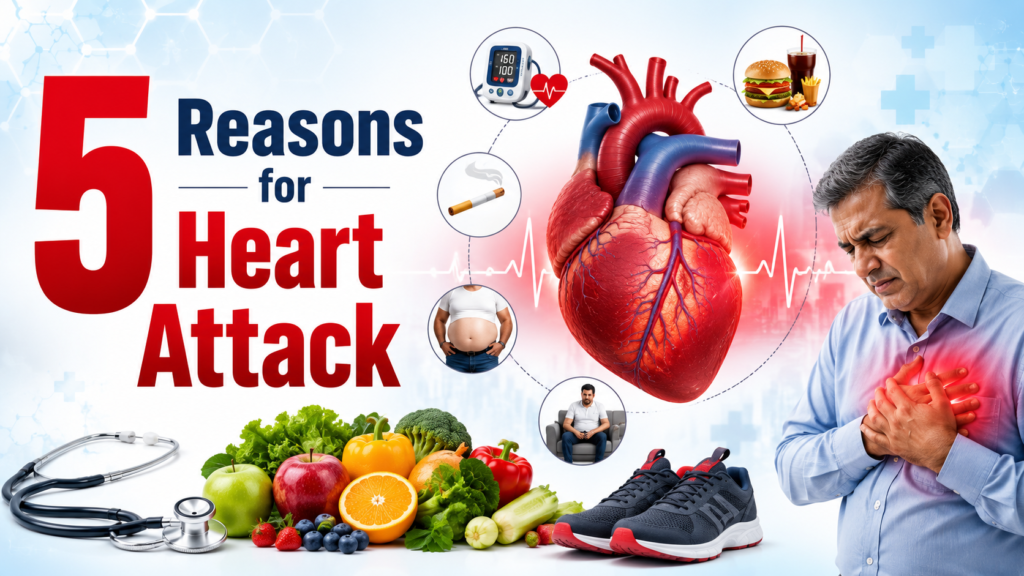
5 Reasons for Heart Attack
Heart disease is one of the leading causes of death worldwide, and heart attacks are becoming increasingly common among both men and women. While age and genetics play a role, many heart attacks are linked to lifestyle habits that can be improved through healthy choices.
The good news is that most risk factors are preventable. By understanding the main reasons behind heart attacks, you can take proactive steps to protect your heart and enjoy a healthier life.
In this article, we’ll discuss the 5 major reasons for heart attack, their warning signs, and practical tips to keep your heart strong naturally.
What Is a Heart Attack?
A heart attack, also known as myocardial infarction, occurs when blood flow to a part of the heart muscle becomes blocked. This blockage usually happens because fatty deposits (plaque) build up inside the coronary arteries. If the blood supply is cut off for too long, part of the heart muscle can become damaged.
Common Symptoms of a Heart Attack
- Chest pain or pressure
- Pain spreading to the left arm, neck, jaw, or back
- Shortness of breath
- Cold sweating
- Dizziness or light-headedness
- Nausea or vomiting
- Extreme fatigue
Note: Women, older adults, and people with diabetes may experience less typical symptoms such as fatigue, indigestion, or discomfort in the back or jaw.
1. High Blood Pressure (Hypertension)
Why It Increases Heart Attack Risk
High blood pressure is often called the “silent killer” because it usually has no noticeable symptoms. Over time, it damages blood vessels, making them stiff and narrow. This increases the heart’s workload and raises the risk of heart attack and stroke.
Risk Factors
- Excess salt intake
- Obesity
- Lack of exercise
- Smoking
- Stress
- Family history
Prevention Tips
✔ Reduce salt intake
✔ Exercise for at least 30 minutes daily
✔ Maintain a healthy weight
✔ Check your blood pressure regularly
✔ Follow your doctor’s advice if medication is prescribed
2. Unhealthy Diet
How Diet Affects Heart Health
A diet high in saturated fats, trans fats, sugar, and processed foods contributes to plaque buildup in the arteries. This condition, known as atherosclerosis, reduces blood flow and increases the risk of heart attack.
Foods That Increase Risk
- Fried foods
- Fast food
- Sugary beverages
- Processed meats
- Excessive sweets
- Packaged snacks
Heart-Healthy Foods
- Green leafy vegetables
- Fruits
- Whole grains
- Nuts and seeds
- Fish
- Lentils and beans
- Healthy oils such as olive oil
A balanced diet rich in fibre and healthy fats helps protect your heart.
3. Smoking and Tobacco Use
Why Smoking Is Dangerous
Smoking is one of the most significant preventable causes of heart disease. Harmful chemicals in tobacco damage blood vessels, reduce oxygen levels in the blood, and increase the formation of blood clots.
Even passive smoking can raise the risk of heart problems.
Effects of Smoking
- Increased blood pressure
- Reduced oxygen supply
- Narrowed arteries
- Higher risk of blood clots
Benefits of Quitting Smoking
✔ Improved circulation
✔ Lower blood pressure
✔ Better lung function
✔ Reduced heart attack risk
✔ Increased life expectancy
Quitting smoking is one of the best decisions you can make for your heart.
4. Obesity and Physical Inactivity
How Extra Weight Affects the Heart
Being overweight puts additional strain on the heart and increases the risk of:
- High blood pressure
- Type 2 diabetes
- High cholesterol
- Sleep apnoea
A sedentary lifestyle further increases these risks by reducing cardiovascular fitness.
Recommended Physical Activity
Adults should aim for:
- At least 150 minutes of moderate-intensity exercise per week, or
- 75 minutes of vigorous exercise per week, plus
- Muscle-strengthening activities on two or more days each week.
Best Exercises for Heart Health
- Brisk walking
- Cycling
- Swimming
- Jogging
- Yoga
- Strength training
Regular movement helps maintain a healthy weight and improves circulation.
5. High Cholesterol and Diabetes
High Cholesterol
High levels of LDL (“bad”) cholesterol contribute to plaque buildup inside the arteries, restricting blood flow to the heart.
Healthy Cholesterol Tips
- Eat more fibre-rich foods.
- Reduce saturated and trans fats.
- Exercise regularly.
- Maintain a healthy weight.
- Have your cholesterol checked as recommended.
Diabetes
High blood sugar can damage blood vessels and nerves that control the heart. People with diabetes are at a significantly higher risk of heart disease.
Managing Diabetes
✔ Eat a balanced diet
✔ Exercise regularly
✔ Monitor blood sugar levels
✔ Take prescribed medications consistently
✔ Attend regular health check-ups
Other Factors That Increase Heart Attack Risk
Although these five causes are common, other factors also contribute:
Chronic Stress
Long-term stress can increase blood pressure and encourage unhealthy habits.
Lack of Sleep
Sleeping less than 7 hours regularly may increase the risk of cardiovascular disease.
Excessive Alcohol Consumption
Heavy alcohol intake can raise blood pressure and contribute to heart rhythm problems.
Family History
If close relatives developed heart disease at an early age, your own risk may be higher.
Age and Gender
Risk generally increases with age, although heart attacks can occur in younger adults too.
How to Keep Your Heart Healthy
Protecting your heart doesn’t require drastic changes. Small, consistent habits can make a big difference.
Eat a Heart-Friendly Diet
Choose foods rich in:
- Fruits
- Vegetables
- Whole grains
- Lean protein
- Healthy fats
- Low-fat dairy
Limit processed foods, sugary drinks, and excessive salt.
Stay Physically Active
Aim for regular physical activity every week.
Even a 30-minute walk each day can:
✔ Improve heart function
✔ Reduce blood pressure
✔ Boost energy levels
✔ Help maintain a healthy weight
Manage Stress
Healthy ways to manage stress include:
- Meditation
- Deep breathing
- Yoga
- Prayer
- Spending time with family
- Hobbies you enjoy
Reducing stress supports both heart and mental health.
Get Enough Sleep
Adults should aim for 7–9 hours of quality sleep each night.
Good sleep helps regulate blood pressure, blood sugar, and hormone balance.
Have Regular Health Check-ups
Routine health screenings can detect problems early.
Discuss regular checks with your healthcare provider, especially if you have risk factors.
Important tests include:
- Blood pressure
- Cholesterol
- Blood sugar
- Body weight and waist circumference
Warning Signs You Should Never Ignore
Seek emergency medical help immediately if you or someone else experiences:
- Severe chest pain lasting more than a few minutes
- Pain spreading to the arm, shoulder, jaw, or back
- Sudden shortness of breath
- Cold sweat
- Fainting or loss of consciousness
- Unexplained nausea with chest discomfort
Prompt treatment can save heart muscle and lives.
Final Thoughts
Understanding the 5 reasons for heart attack is the first step toward prevention. High blood pressure, unhealthy eating, smoking, obesity with physical inactivity, and high cholesterol or diabetes are major contributors—but many of these risks can be reduced through healthier daily habits.
By eating a balanced diet, staying active, maintaining a healthy weight, avoiding tobacco, managing stress, and attending regular health check-ups, you can significantly lower your risk of heart disease.
Your heart works continuously to keep you alive. Taking care of it today can lead to a healthier, more energetic future.
Frequently Asked Questions (FAQs)
1. What is the most common cause of a heart attack?
The most common cause is blockage of the coronary arteries due to plaque buildup (atherosclerosis).
2. Can young people have heart attacks?
Yes. Poor lifestyle habits, smoking, obesity, diabetes, and family history can increase the risk even in younger adults.
3. Which foods are good for heart health?
Fruits, vegetables, whole grains, nuts, seeds, legumes, fish, and healthy oils are excellent choices.
4. Can exercise reduce heart attack risk?
Yes. Regular physical activity improves heart health, helps control blood pressure, cholesterol, and body weight.
5. Is stress a risk factor for heart disease?
Yes. Long-term stress can contribute to high blood pressure and unhealthy lifestyle behaviours that increase heart disease risk.