
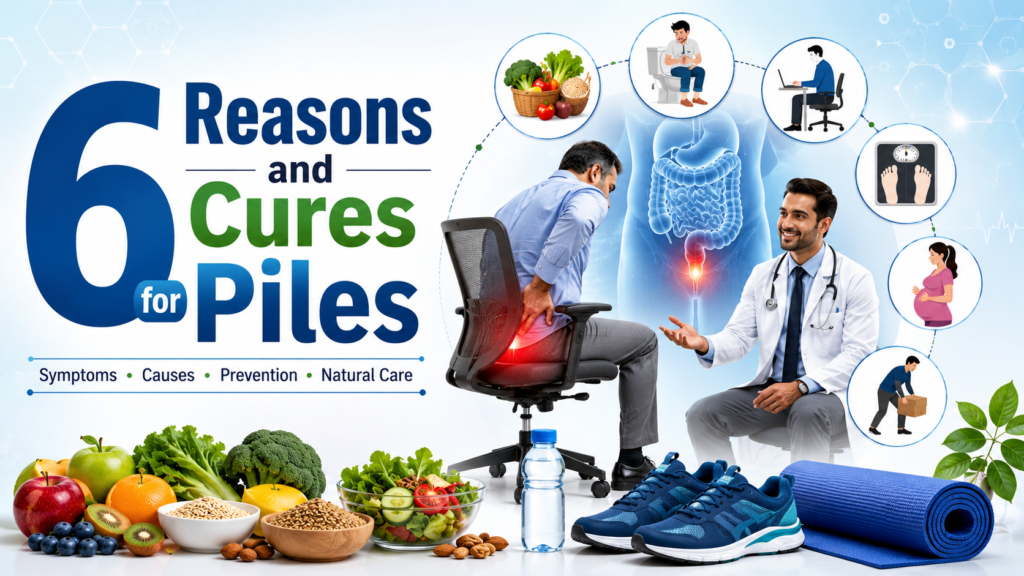
6 Reasons and Cures for Piles
Piles, also known as hemorrhoids, are swollen and inflamed veins in the lower rectum or anus. They are one of the most common digestive health problems affecting both men and women. Although piles can be painful and uncomfortable, they are often manageable with lifestyle changes, a healthy diet, and appropriate medical treatment.
Modern lifestyles, poor eating habits, prolonged sitting, and constipation have significantly increased the number of people suffering from piles. Fortunately, most cases can be prevented and improved through healthy daily habits.
In this article, we’ll discuss the 6 cures for piles, their symptoms, and the best treatment and prevention methods to help you maintain better digestive health.
What Are Piles?
Piles develop when the veins around the rectum or anus become swollen due to increased pressure. They can be:
Internal Piles
Located inside the rectum. They usually don’t cause pain but may bleed during bowel movements.
External Piles
Develop under the skin around the anus and may cause pain, swelling, itching, or discomfort.
Common Symptoms of Piles
Symptoms vary depending on the type and severity but may include:
-
- Bleeding during bowel movements
-
- Pain or discomfort while sitting
-
- Itching around the anus
-
- Swelling or lumps near the anus
-
- Mucus discharge
-
- Feeling of incomplete bowel emptying
If you notice persistent bleeding, severe pain, or changes in bowel habits, consult a qualified healthcare professional promptly.
1. Chronic Constipation
Why It Causes Piles
Constipation is one of the leading causes of piles. Straining during bowel movements puts excessive pressure on the veins in the rectum and anus, causing them to swell.
Common Causes of Constipation
-
- Low-fibre diet
-
- Inadequate water intake
-
- Lack of physical activity
-
- Ignoring the urge to pass stools
How to Prevent It
✔ Eat fibre-rich foods
✔ Drink 2–3 litres of water daily
✔ Exercise regularly
✔ Avoid delaying bowel movements
2. Low-Fibre Diet
How Diet Affects Digestive Health
A diet lacking in fibre results in hard stools that are difficult to pass, increasing strain during bowel movements.
High-Fibre Foods
-
- Whole grains
-
- Oats
-
- Brown rice
-
- Fruits
-
- Vegetables
-
- Beans
-
- Lentils
-
- Flaxseeds
Benefits of Fibre
✔ Softer stools
✔ Better digestion
✔ Reduced constipation
✔ Lower risk of piles
Experts recommend that adults consume 25–35 grams of fibre daily.
3. Prolonged Sitting
Why Sitting Too Long Is Harmful
People who sit for long hours, especially office workers and drivers, may develop increased pressure around the rectal veins.
Reduce Your Risk
-
- Stand up every 30–60 minutes.
-
- Take short walks during breaks.
-
- Use an ergonomic chair.
-
- Avoid sitting on the toilet for long periods, especially while using your phone.
Regular movement improves blood circulation and reduces pressure on the lower body.
4. Obesity and Lack of Exercise
Extra Weight Increases Pressure
Being overweight increases abdominal pressure, which can contribute to piles.
Physical inactivity also slows digestion and increases the likelihood of constipation.
Recommended Activities
-
- Walking
-
- Cycling
-
- Yoga
-
- Swimming
-
- Light strength training
Aim for at least 150 minutes of moderate exercise each week.
Benefits of Exercise
✔ Improves digestion
✔ Maintains healthy weight
✔ Prevents constipation
✔ Supports healthy circulation
5. Pregnancy
Why Pregnant Women Develop Piles
During pregnancy, the growing uterus puts additional pressure on pelvic veins. Hormonal changes also slow digestion, increasing the risk of constipation.
Helpful Tips
-
- Eat high-fibre foods.
-
- Stay hydrated.
-
- Walk daily if approved by your healthcare provider.
-
- Avoid standing or sitting for prolonged periods.
Most pregnancy-related piles improve after childbirth, but medical advice should be sought if symptoms are severe.
6. Heavy Lifting
How Heavy Lifting Contributes
Regular lifting of heavy objects increases pressure inside the abdomen, which can strain the veins around the rectum.
Prevention Tips
-
- Lift using proper technique.
-
- Avoid lifting beyond your capacity.
-
- Strengthen your core muscles.
-
- Take adequate rest between heavy tasks.
Natural Ways to Manage Piles
Lifestyle changes often help relieve mild symptoms.
Eat a High-Fibre Diet
Include:
-
- Apples
-
- Pears
-
- Papaya
-
- Spinach
-
- Broccoli
-
- Whole grains
-
- Lentils
Drink Plenty of Water
Aim for 2–3 litres of water daily unless advised otherwise by your healthcare provider.
Exercise Daily
Regular physical activity improves bowel function and supports overall digestive health.
Warm Sitz Baths
Sitting in warm water for 10–15 minutes several times a day may help reduce discomfort and keep the area clean.
Avoid Straining
Don’t force bowel movements. Take your time and respond promptly to the natural urge.
Medical Treatment Options
If lifestyle changes are not enough, your healthcare provider may recommend:
-
- Stool softeners or fibre supplements
-
- Topical creams or ointments for symptom relief
-
- Pain-relieving medication if appropriate
-
- Office-based procedures such as rubber band ligation for selected cases
-
- Surgery for severe or persistent piles when other treatments are ineffective
Always seek professional medical advice before starting any medication.
Foods That Support Digestive Health
A healthy diet can reduce the risk of constipation and improve bowel health.
Eat More Of:
-
- Fruits
-
- Green leafy vegetables
-
- Whole grains
-
- Oats
-
- Brown rice
-
- Beans
-
- Lentils
-
- Yogurt (if tolerated)
-
- Nuts and seeds
Limit:
-
- Fried foods
-
- Processed snacks
-
- Refined flour products
-
- Excessive spicy foods (if they worsen your symptoms)
-
- Alcohol (if advised by your healthcare provider)
Healthy Daily Routine for Preventing Piles
Morning
-
- Drink warm water after waking up.
-
- Eat a fibre-rich breakfast.
-
- Go for a 20–30 minute walk.
Afternoon
-
- Stay hydrated.
-
- Eat vegetables and whole grains with lunch.
-
- Avoid sitting continuously for long periods.
Evening
-
- Do light stretching or yoga.
-
- Eat a balanced dinner.
Night
-
- Drink enough water throughout the day.
-
- Get 7–9 hours of quality sleep.
Consistency with these habits supports long-term digestive health.
When Should You See a Doctor?
Seek medical attention if you experience:
-
- Persistent rectal bleeding
-
- Severe pain
-
- Large swelling around the anus
-
- Fever or signs of infection
-
- Symptoms lasting more than a week despite self-care
-
- Changes in bowel habits or unexplained weight loss
These symptoms may require evaluation to rule out other digestive conditions.
Final Thoughts
Piles are a common condition, but they don’t have to interfere with your daily life. Understanding the 6 reasons and cures for piles can help you take control of your digestive health and reduce the risk of future problems.
Simple lifestyle changes such as eating more fibre, staying hydrated, exercising regularly, maintaining a healthy weight, avoiding prolonged sitting, and responding promptly to bowel urges can make a significant difference.
If symptoms persist or become severe, consult a qualified healthcare professional for proper diagnosis and treatment. Early care often leads to faster relief and helps prevent complications.
Frequently Asked Questions (FAQs)
1. What is the main cause of piles?
The most common causes are chronic constipation, straining during bowel movements, a low-fibre diet, prolonged sitting, obesity, pregnancy, and heavy lifting.
2. Can piles be cured naturally?
Many mild cases improve with a high-fibre diet, adequate hydration, regular exercise, and healthy bowel habits. Some cases may still require medical treatment.
3. Which foods are best for piles?
Fruits, vegetables, whole grains, beans, lentils, oats, and foods rich in fibre help support healthy bowel movements.
4. Is walking good for piles?
Yes. Walking improves digestion, promotes regular bowel movements, and helps reduce constipation, which can lower the risk of piles.
5. Can piles return after treatment?
Yes. Piles can recur if constipation, straining, or other risk factors continue. Maintaining healthy lifestyle habits helps reduce the chance of recurrence.