
In today’s fast-paced world, lifestyle diseases such as diabetes, high blood pressure, obesity, and heart problems are becoming increasingly common. Many people rely heavily on medications to manage these conditions. While medicines are necessary in many situations, adopting healthy lifestyle habits can help prevent numerous diseases and reduce dependence on medications over time.
A medicine-free life does not mean avoiding necessary medical treatment or prescribed medicines. Instead, it means taking proactive steps to maintain good health naturally through proper nutrition, regular exercise, adequate sleep, and stress management.
The human body has an incredible ability to heal and protect itself when provided with the right environment and healthy habits. By making simple changes in your daily routine, you can strengthen your immune system, improve your overall well-being, and enjoy a healthier and happier life.
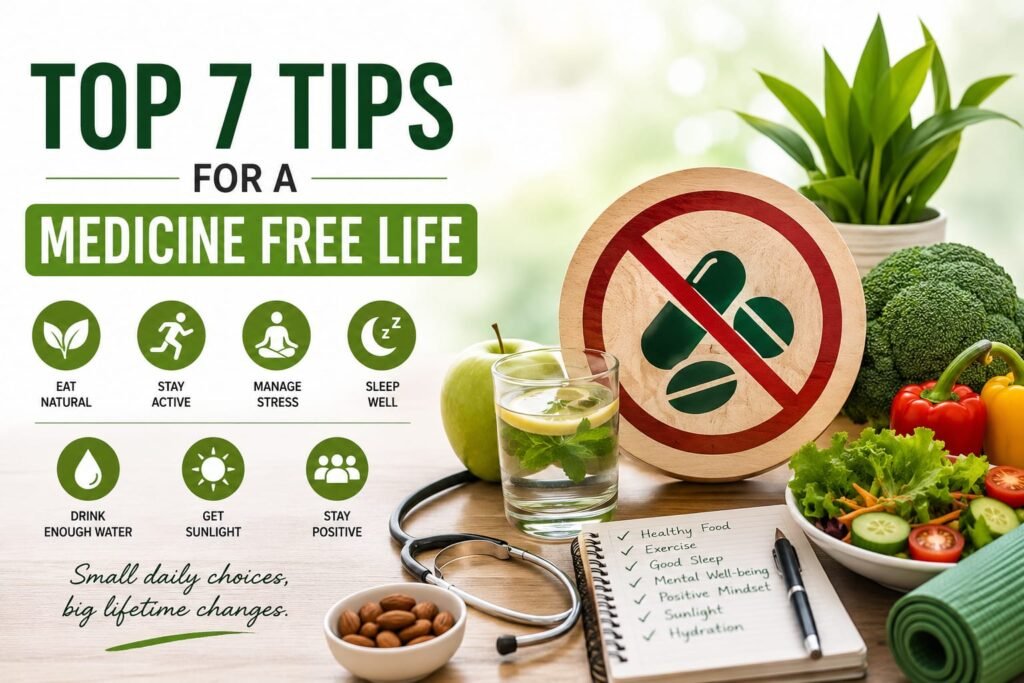
In this article, we will explore the Top 7 Tips For A Medicine-Free Life that can help you achieve long-term health naturally.
Why Focus on a Medicine-Free Lifestyle?
Modern lifestyles often include:
- Unhealthy eating habits
- Lack of physical activity
- Excessive stress
- Poor sleep quality
- Increased consumption of processed foods
- Sedentary work environments
These habits contribute to chronic health problems that often require long-term medications.
A healthy lifestyle helps:
✔ Improve immunity
✔ Maintain healthy body weight
✔ Reduce the risk of chronic diseases
✔ Improve energy levels
✔ Enhance mental well-being
✔ Promote healthy aging
Let’s explore the seven most effective tips for living a healthier and more natural life.
1. Eat a Balanced and Nutritious Diet
Your food is your body’s fuel. Eating nutrient-rich foods is one of the most powerful ways to maintain good health and prevent disease.
What to Include in Your Diet
Fresh Fruits and Vegetables
Rich in vitamins, minerals, antioxidants, and fiber.
Whole Grains
Brown rice, oats, and whole wheat improve digestion and support heart health.
Healthy Fats
Nuts, seeds, olive oil, and avocados support brain and heart health.
Protein Sources
Lentils, beans, eggs, fish, and lean meats help repair and build body tissues.
Foods to Limit
- Sugary drinks
- Processed foods
- Fried foods
- Excessive salt
- Refined carbohydrates
Pro Tip:
Try to fill half of your plate with vegetables and fruits at every meal.
2. Exercise Regularly
Regular physical activity is one of the best natural medicines available. Exercise strengthens the body, improves mental health, and helps prevent numerous diseases.
Benefits of Regular Exercise
✔ Improves heart health
✔ Helps manage weight
✔ Reduces blood pressure
✔ Strengthens muscles and bones
✔ Improves mood and reduces stress
✔ Enhances sleep quality
Recommended Exercise Routine
- Brisk walking for 30 minutes
- Cycling
- Yoga
- Strength training
- Stretching exercises
Goal:
Aim for at least 150 minutes of moderate exercise every week.
Even simple activities like taking the stairs or walking after meals can make a significant difference.
3. Get Quality Sleep
Sleep is essential for the body’s repair and recovery process. Poor sleep can weaken the immune system and increase the risk of chronic diseases.
Benefits of Good Sleep
✔ Improves memory and concentration
✔ Supports immune function
✔ Maintains hormonal balance
✔ Reduces stress levels
✔ Promotes healthy metabolism
Healthy Sleep Habits
- Sleep for 7-8 hours every night.
- Avoid mobile phones before bedtime.
- Maintain a consistent sleep schedule.
- Create a peaceful sleeping environment.
Pro Tip:
Avoid caffeine and heavy meals late at night to improve sleep quality.
4. Manage Stress Effectively
Chronic stress negatively affects both physical and mental health. It can contribute to high blood pressure, digestive problems, anxiety, and weakened immunity.
Simple Ways to Reduce Stress
Practice Meditation
Just 10 minutes of meditation daily can calm the mind.
Deep Breathing Exercises
Deep breathing helps lower stress hormones.
Spend Time in Nature
Walking outdoors refreshes both the body and mind.
Pursue Hobbies
Reading, gardening, and music can improve emotional well-being.
Benefits of Stress Management
✔ Improves heart health
✔ Enhances immunity
✔ Improves sleep quality
✔ Increases happiness and productivity
5. Stay Hydrated
Water plays a vital role in maintaining overall health. It helps regulate body temperature, improve digestion, and remove toxins from the body.
Benefits of Drinking Enough Water
✔ Improves digestion
✔ Enhances skin health
✔ Increases energy levels
✔ Supports kidney function
✔ Helps maintain a healthy weight
How Much Water Should You Drink?
Most adults should aim for 2-3 liters of water daily, depending on their activity level and climate.
Pro Tip:
Carry a water bottle with you and drink water regularly throughout the day.
6. Avoid Harmful Habits
Certain lifestyle habits significantly increase the risk of disease and dependence on medications.
Habits to Avoid
Smoking
Smoking damages the lungs and increases the risk of heart disease and cancer.
Excessive Alcohol Consumption
Too much alcohol can harm the liver and increase blood pressure.
Excessive Screen Time
Long periods of sitting and screen exposure can affect both physical and mental health.
Overeating Processed Foods
Highly processed foods contribute to obesity and chronic diseases.
Healthy Alternatives
- Replace sugary drinks with water.
- Choose healthy snacks such as fruits and nuts.
- Take regular breaks from screens.
7. Schedule Regular Health Checkups
Preventive healthcare is an important part of living a healthy life. Regular health screenings can detect problems early before they become serious.
Essential Health Checkups
- Blood pressure monitoring
- Blood sugar testing
- Cholesterol screening
- Weight and BMI assessment
- Eye and dental examinations
Benefits of Regular Checkups
✔ Early detection of diseases
✔ Better health management
✔ Prevention of complications
✔ Peace of mind
Remember, prevention is always better than treatment.
Bonus Tips for a Healthier and Medicine-Free Life
Spend Time with Family and Friends
Strong relationships improve emotional well-being.
Practice Gratitude
Positive thinking can reduce stress and improve mental health.
Maintain a Healthy Weight
Being overweight increases the risk of several diseases.
Stay Physically Active Throughout the Day
Avoid sitting continuously for long hours.
Build Healthy Daily Habits
Small changes practiced consistently lead to lasting results.
Simple Daily Routine for a Medicine-Free Life
| Time | Healthy Habit |
|---|---|
| Morning | Drink warm water and exercise |
| Breakfast | Eat a nutritious meal |
| Afternoon | Stay hydrated and walk for a few minutes |
| Evening | Spend time with family or practice a hobby |
| Night | Eat a light dinner and sleep on time |
Following a structured routine can significantly improve your overall health.
Benefits of Living a Healthy Lifestyle
By adopting these healthy habits, you can:
✔ Improve immunity naturally
✔ Increase energy and productivity
✔ Reduce the risk of lifestyle diseases
✔ Improve mental health
✔ Maintain healthy body weight
✔ Enhance quality of life
✔ Promote healthy aging
Conclusion
Living a medicine-free life is not about avoiding medical care when needed. Instead, it is about making conscious choices that help prevent diseases and promote long-term wellness.
These Top 7 Tips For A Medicine-Free Life—eating nutritious foods, exercising regularly, sleeping well, managing stress, staying hydrated, avoiding harmful habits, and scheduling regular health checkups—can help you lead a healthier and happier life.
Remember, good health is built through small daily habits. Every healthy choice you make today is an investment in a stronger and healthier future.
Take care of your body naturally, and it will take care of you for years to come.