
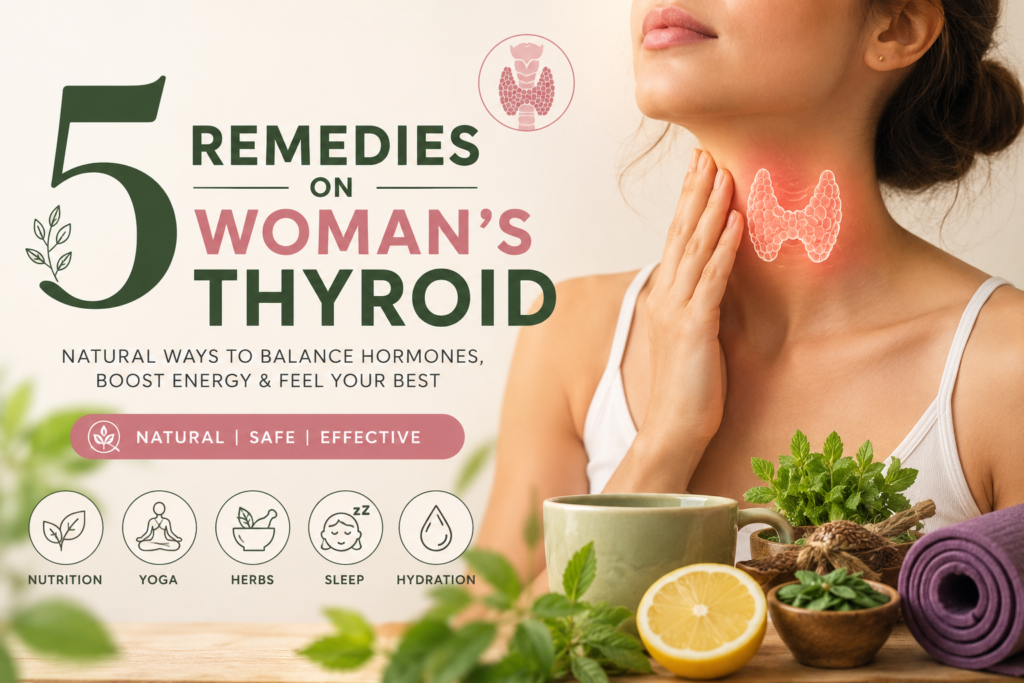
The thyroid is a small butterfly-shaped gland located in the front of the neck, but it plays a huge role in maintaining overall health. It produces hormones that regulate metabolism, energy levels, body temperature, heart rate, and many other essential functions.
Women are significantly more likely than men to develop thyroid disorders, particularly hypothyroidism (underactive thyroid) and hyperthyroidism (overactive thyroid). Hormonal changes during pregnancy, menopause, and aging can also affect thyroid function.
Common symptoms include fatigue, weight changes, hair loss, dry skin, mood changes, irregular menstrual cycles, and difficulty concentrating. While medical treatment is essential for diagnosed thyroid disorders, healthy lifestyle habits can support thyroid health and complement prescribed treatment.
Important: Natural remedies are meant to support overall thyroid health and should not replace medications or medical advice. Always consult your healthcare provider before making changes to your treatment plan.
In this article, we’ll explore 5 Natural Remedies for Women’s Thyroid Health that may help support thyroid function and overall well-being.
Why Thyroid Health Matters
The thyroid gland controls many important body functions, including:
- Metabolism
- Heart rate
- Body temperature
- Energy production
- Brain function
- Menstrual health
- Fertility
- Weight management
Keeping your thyroid healthy is essential for maintaining overall physical and emotional wellness.
1. Eat a Nutrient-Rich Diet
A balanced diet provides the nutrients your thyroid needs to function properly.
Key Nutrients for Thyroid Health
Iodine
Iodine is required to produce thyroid hormones.
Food Sources:
- Iodized salt
- Dairy products
- Eggs
- Seafood
Note: Too much iodine can also be harmful, especially for some thyroid conditions. Avoid supplements unless advised by your doctor.
Selenium
Selenium supports thyroid hormone metabolism and helps protect the thyroid gland.
Food Sources:
- Brazil nuts (eat in moderation)
- Tuna
- Eggs
- Sunflower seeds
Zinc
Zinc supports hormone production and immune function.
Food Sources:
- Pumpkin seeds
- Chickpeas
- Lentils
- Lean meat
Iron
Iron deficiency can affect thyroid hormone production.
Food Sources:
- Spinach
- Beans
- Lean meat
- Fortified cereals
Vitamin D
Vitamin D plays a role in immune health and overall wellness.
Food Sources:
- Sunlight exposure
- Fatty fish
- Egg yolks
- Fortified foods
2. Exercise Regularly
Regular physical activity helps improve energy levels, maintain a healthy weight, and support overall hormonal balance.
Benefits of Exercise
✔ Boosts metabolism
✔ Supports weight management
✔ Improves mood
✔ Reduces fatigue
✔ Promotes better sleep
Recommended Activities
- Brisk walking
- Yoga
- Swimming
- Cycling
- Light strength training
- Stretching exercises
Aim for at least 150 minutes of moderate exercise each week, or follow your healthcare provider’s advice if you have thyroid-related fatigue.
3. Manage Stress Effectively
Long-term stress can affect hormone balance and overall health.
Simple Stress-Management Techniques
Meditation
Practice mindfulness for 10–15 minutes daily.
Deep Breathing
Slow, controlled breathing can help you relax.
Yoga
Yoga combines gentle movement with breathing exercises.
Spend Time Outdoors
Nature walks can reduce stress and improve mood.
Pursue Hobbies
Reading, gardening, music, or art can improve emotional well-being.
Benefits
✔ Better sleep
✔ Improved mood
✔ Reduced anxiety
✔ Greater overall well-being
4. Prioritize Good Sleep
Sleep is essential for hormone regulation and recovery.
Healthy Sleep Habits
- Sleep for 7–9 hours every night.
- Keep a consistent bedtime.
- Avoid caffeine late in the day.
- Reduce screen time before bed.
- Make your bedroom quiet and comfortable.
Benefits of Quality Sleep
✔ Supports hormonal balance
✔ Improves concentration
✔ Helps regulate appetite
✔ Increases energy levels
5. Stay Hydrated and Maintain Healthy Lifestyle Habits
Water is essential for nearly every function in the body.
Hydration Tips
- Drink enough water throughout the day.
- Eat water-rich fruits and vegetables.
- Limit sugary beverages.
Additional Healthy Habits
Avoid Smoking
Smoking may negatively affect thyroid function and overall health.
Limit Alcohol
Excessive alcohol can interfere with overall hormonal health.
Maintain a Healthy Weight
Balanced nutrition and regular activity help support long-term wellness.
Attend Regular Medical Checkups
Routine monitoring is especially important if you have a diagnosed thyroid condition.
Foods That Support Thyroid Health
Include these nutrient-rich foods regularly:
- Eggs
- Fish
- Yogurt
- Lentils
- Beans
- Spinach
- Pumpkin seeds
- Brazil nuts (in moderation)
- Fresh fruits
- Whole grains
Foods to Enjoy in Moderation
Some foods can affect thyroid hormone absorption or iodine intake, especially in people with thyroid disorders.
These include:
- Highly processed foods
- Excess sugary foods
- Deep-fried foods
- Large amounts of soy products (if advised by your doctor)
- Large amounts of raw cruciferous vegetables such as cabbage, cauliflower, broccoli, and kale if iodine intake is low (these foods are generally safe and nutritious when eaten in normal amounts and especially when cooked).
If you take thyroid medication, follow your healthcare provider’s instructions about taking it on an empty stomach and separating it from supplements such as calcium or iron.
Sample Daily Routine for Better Thyroid Health
| Time | Healthy Habit |
|---|---|
| Morning | Drink water and take prescribed thyroid medication (if applicable, as directed) |
| Breakfast | Protein-rich meal with whole grains and fruit |
| Mid-Morning | Short walk or stretching |
| Lunch | Vegetables, lentils, lean protein, and whole grains |
| Evening | Yoga or a 30-minute walk |
| Night | Light dinner and 7–9 hours of sleep |
Additional Tips for Women’s Thyroid Health
- Eat balanced meals at regular times.
- Stay physically active.
- Manage stress with relaxation techniques.
- Maintain a healthy weight.
- Drink enough water daily.
- Get regular blood tests if recommended.
- Follow your doctor’s treatment plan.
- Avoid self-medicating with thyroid supplements.
When Should You See a Doctor?
Consult a healthcare professional if you experience:
- Persistent fatigue
- Unexplained weight gain or weight loss
- Hair loss
- Swelling in the neck
- Irregular menstrual cycles
- Depression or anxiety
- Rapid or slow heartbeat
- Feeling unusually cold or hot
Early diagnosis and treatment can help prevent complications.
Conclusion
Maintaining good thyroid health requires a combination of balanced nutrition, regular exercise, quality sleep, stress management, and routine medical care. These 5 Natural Remedies for Women’s Thyroid Health can support your overall well-being and complement appropriate medical treatment.
Remember that thyroid disorders are medical conditions that often require professional diagnosis and treatment. Natural lifestyle changes are valuable for supporting health, but they should not replace prescribed medication or medical advice.
By making healthy choices every day, you can support your thyroid, improve your energy levels, and enjoy a healthier, more active life.
Frequently Asked Questions (FAQ)
1. Can thyroid problems be cured naturally?
Some thyroid conditions require lifelong medical treatment. Healthy lifestyle habits can support thyroid health but should not replace prescribed treatment.
2. Which foods are best for thyroid health?
Foods rich in iodine (when appropriate), selenium, zinc, iron, protein, and vitamin D can support thyroid function.
3. Is exercise good for thyroid patients?
Yes. Regular, moderate exercise can improve energy, mood, and overall health. Choose an activity level that suits your condition and consult your doctor if needed.
4. Can stress affect thyroid health?
Chronic stress may influence overall hormonal health, making stress management an important part of a healthy lifestyle.