
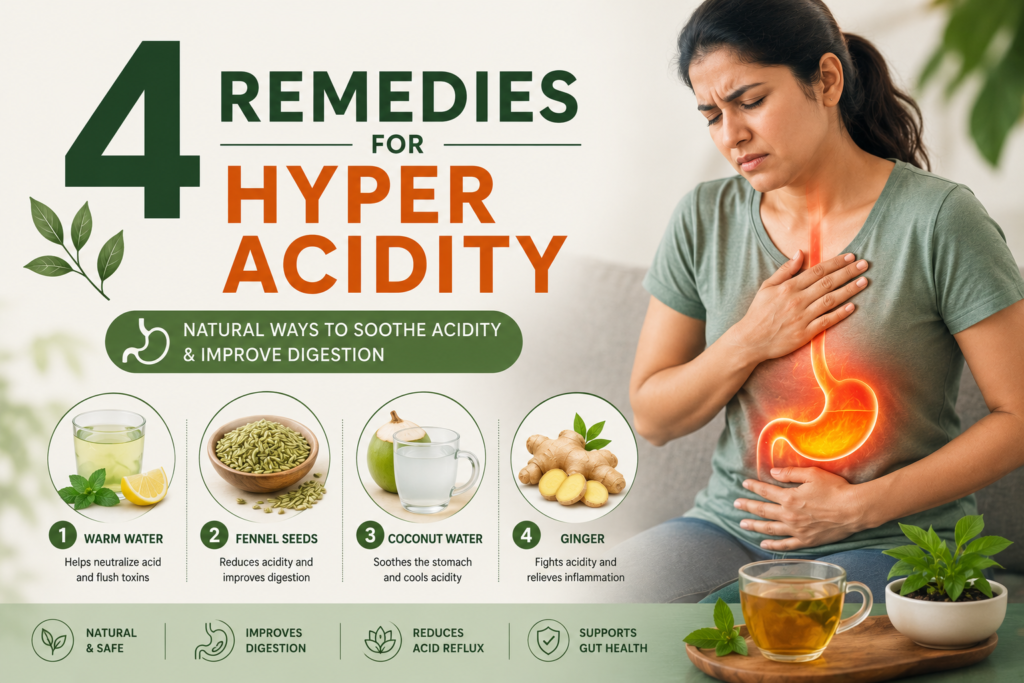
Effective Ways to Relieve Acid Reflux and Improve Digestive Health Naturally
Hyper acidity, commonly known as acid reflux or excess stomach acid, is a common digestive problem that affects millions of people worldwide. It occurs when the stomach produces excess acid or when stomach acid flows back into the food pipe (esophagus), causing discomfort.
Common symptoms include heartburn, a burning sensation in the chest, sour taste in the mouth, bloating, indigestion, nausea, and frequent burping. Factors such as unhealthy eating habits, stress, overeating, smoking, alcohol consumption, obesity, and lack of physical activity can increase the risk of hyper acidity.
The good news is that many cases of mild hyper acidity can be improved through healthy lifestyle habits and natural remedies. However, persistent or severe symptoms should always be evaluated by a healthcare professional, as they may indicate conditions such as gastroesophageal reflux disease (GERD), ulcers, or other digestive disorders.
In this article, you’ll discover 4 Natural Remedies for Hyper acidity that may help support digestive health and reduce acid reflux naturally.
What Causes Hyper acidity?
Several factors can contribute to hyper acidity, including:
-
- Eating spicy or oily foods
-
- Overeating
-
- Eating late at night
-
- Excess tea, coffee, or carbonated drinks
-
- Smoking
-
- Alcohol consumption
-
- Stress and anxiety
-
- Obesity
-
- Certain medications
-
- Lack of physical activity
Understanding these triggers is the first step toward preventing acidity.
Common Symptoms of Hyper acidity
You may experience:
-
- Burning sensation in the chest (heartburn)
-
- Sour or bitter taste in the mouth
-
- Frequent burping
-
- Bloating
-
- Indigestion
-
- Nausea
-
- Stomach discomfort after meals
-
- Feeling of food coming back into the throat
If symptoms occur frequently or become severe, consult your healthcare provider.
1. Eat Smaller, Balanced Meals
One of the simplest ways to reduce hyper acidity is by changing your eating habits. Large meals put more pressure on the stomach and increase the likelihood of acid reflux.
Healthy Eating Tips
-
- Eat smaller meals 4–5 times a day.
-
- Chew your food slowly.
-
- Avoid overeating.
-
- Finish dinner at least 2–3 hours before bedtime.
-
- Eat at regular times each day.
Foods That May Help
-
- Oatmeal
-
- Bananas
-
- Rice
-
- Apples
-
- Steamed vegetables
-
- Whole grains
-
- Yogurt (if tolerated)
-
- Lean proteins
Foods to Limit
-
- Fried foods
-
- Spicy foods
-
- Excessive chocolate
-
- Citrus fruits (if they trigger symptoms)
-
- Tomato-based sauces (if they trigger symptoms)
-
- Carbonated drinks
-
- Caffeinated beverages
-
- Alcohol
A food diary can help identify your personal trigger foods.
2. Stay Hydrated and Choose Gentle Drinks
Drinking enough water supports normal digestion and overall health.
Hydration Tips
-
- Drink water regularly throughout the day.
-
- Sip water between meals rather than drinking large amounts during meals if that worsens your symptoms.
-
- Avoid sugary soft drinks.
Gentle Beverage Options
-
- Plain water
-
- Coconut water (if suitable for you)
-
- Herbal teas that you tolerate (avoid peppermint if it worsens reflux)
-
- Warm water
Hydration supports digestive function, but it does not neutralize stomach acid.
3. Manage Stress and Stay Physically Active
Stress does not directly cause excess stomach acid, but it can worsen digestive symptoms and make heartburn feel more noticeable.
Stress-Relief Activities
Meditation
Practice for 10–15 minutes daily.
Deep Breathing
Simple breathing exercises can help relax the body.
Yoga
Gentle yoga may improve overall well-being.
Walking
A short walk after meals can support digestion. Avoid vigorous exercise immediately after eating.
Benefits
✔ Supports digestion
✔ Improves mood
✔ Promotes better sleep
✔ Helps maintain a healthy weight
Aim for 150 minutes of moderate physical activity each week.
4. Adopt Healthy Lifestyle Habits
Simple daily habits can make a significant difference in preventing hyperacidity.
Maintain a Healthy Weight
Excess body weight increases pressure on the stomach, making reflux more likely.
Avoid Lying Down After Meals
Wait at least 2–3 hours before lying down or sleeping.
Sleep Position
If nighttime reflux is a problem, elevating the head of your bed may help reduce symptoms.
Quit Smoking
Smoking weakens the lower esophageal sphincter, increasing the risk of acid reflux.
Limit Alcohol
Alcohol may trigger reflux in some people and should be consumed in moderation or avoided if it causes symptoms.
Foods That Support Digestive Health
Include these foods regularly:
-
- Oats
-
- Bananas
-
- Apples
-
- Brown rice
-
- Whole grains
-
- Steamed vegetables
-
- Leafy greens
-
- Lentils
-
- Lean chicken
-
- Fish
-
- Ginger (in moderation if tolerated)
A balanced diet rich in fiber supports healthy digestion.
Daily Routine to Help Manage Hyper acidity
| Time | Healthy Habit |
|---|---|
| Morning | Drink water and eat a light, balanced breakfast |
| Mid-Morning | Healthy fruit or whole-grain snack |
| Lunch | Balanced meal with vegetables and lean protein |
| Evening | 20–30 minute walk |
| Dinner | Eat a light meal at least 2–3 hours before bedtime |
Additional Tips for Better Digestive Health
-
- Eat slowly and chew food well.
-
- Avoid tight clothing around the waist after meals.
-
- Identify and avoid your personal trigger foods.
-
- Reduce processed foods.
-
- Sleep 7–9 hours each night.
-
- Stay physically active.
-
- Manage stress with relaxation techniques.
When Should You See a Doctor?
Seek medical advice if you experience:
-
- Frequent heartburn (more than twice a week)
-
- Difficulty swallowing
-
- Persistent vomiting
-
- Blood in vomit or black stools
-
- Unexplained weight loss
-
- Severe chest pain
-
- Symptoms that continue despite lifestyle changes
These symptoms may require further evaluation and treatment.
Can Hyper acidity Be Prevented?
In many cases, yes. Healthy daily habits can reduce the likelihood of recurring acidity.
Prevention Tips
✔ Eat balanced meals
✔ Avoid overeating
✔ Stay hydrated
✔ Exercise regularly
✔ Maintain a healthy weight
✔ Avoid smoking
✔ Limit alcohol
✔ Reduce stress
✔ Sleep well
Consistency is the key to long-term digestive health.
Conclusion
Hyperacidity is a common digestive problem, but simple lifestyle changes can often make a significant difference. These 4 Natural Remedies for Hyper acidity—eating smaller balanced meals, staying hydrated, managing stress while staying active, and adopting healthy lifestyle habits—can help reduce symptoms and support overall digestive health.
Remember that while natural remedies and healthy habits may help manage mild symptoms, they are not a substitute for medical treatment. If your symptoms are frequent, severe, or persistent, consult a qualified healthcare professional for proper diagnosis and treatment.
Taking care of your digestive system today can lead to better comfort, improved health, and a higher quality of life.
Frequently Asked Questions (FAQ)
1. What is the main cause of hyper acidity?
Common causes include overeating, spicy or fatty foods, obesity, smoking, alcohol, stress, and eating close to bedtime.
2. Can drinking water cure hyper acidity?
Water supports hydration and digestion but does not cure acid reflux. Lifestyle changes and medical treatment may be needed depending on the cause.
3. Is walking after meals good for acidity?
Yes. A gentle walk after eating may support digestion. Avoid intense exercise immediately after meals.
4. Which foods are good for hypera cidity?
Foods such as oatmeal, bananas, apples, whole grains, steamed vegetables, and lean proteins are often well tolerated, though individual triggers vary. Further more details Contact Us