
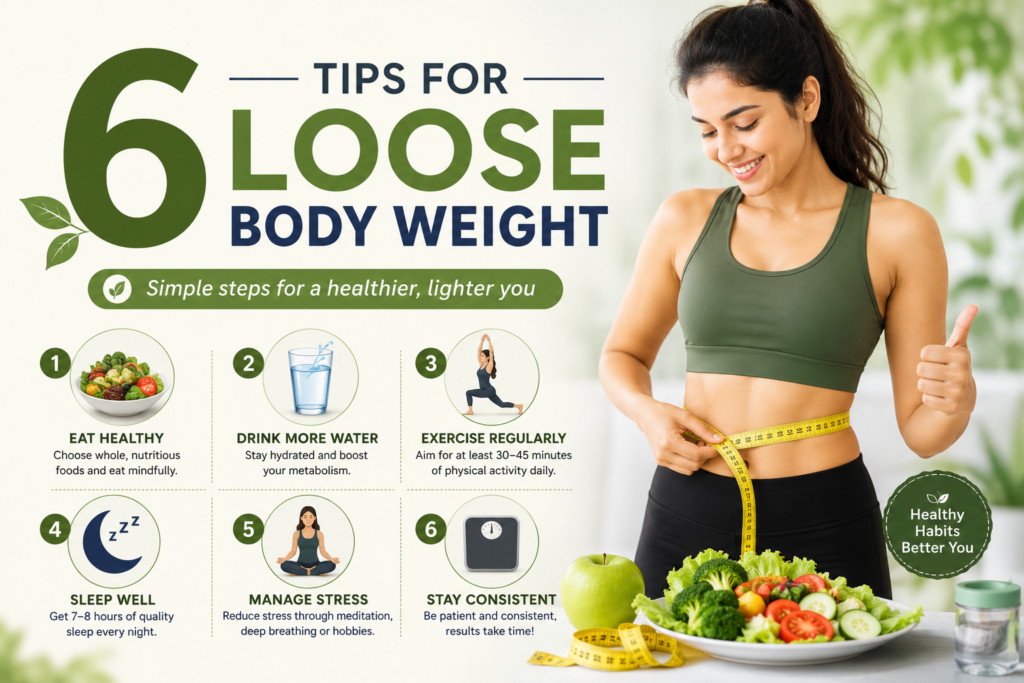
Lose Body Weight
Maintaining a healthy body weight is one of the most important steps toward living a healthier and more active life. Excess body weight increases the risk of several health conditions, including heart disease, type 2 diabetes, high blood pressure, joint pain, fatty liver disease, and sleep apnea. It can also affect your confidence, energy levels, and overall quality of life.
The good news is that healthy and sustainable weight loss does not require crash diets or extreme workout routines. Instead, it comes from building consistent habits such as eating balanced meals, staying physically active, sleeping well, and managing stress.
If your goal is to lose weight safely, remember that gradual weight loss is more effective and easier to maintain than rapid weight loss. Small daily improvements can lead to long-term success.
In this article, we’ll explore 6 Tips to Lose Body Weight Naturally that can help you achieve your fitness goals while improving your overall health.
Why Maintaining a Healthy Weight Matters
A healthy weight supports almost every part of your body. Benefits include:
-
- Better heart health
-
- Improved blood sugar control
-
- Reduced joint stress
-
- Increased energy
-
- Better mobility
-
- Improved sleep quality
-
- Enhanced self-confidence
-
- Lower risk of chronic diseases
lose body Weight should focus on improving health rather than simply reducing the number on the scale.
1. Follow a Balanced and Portion-Controlled Diet
Your diet plays the biggest role in lose body weight management. Instead of eliminating entire food groups, focus on eating nutritious, balanced meals.
What to Include
Fresh Fruits and Vegetables
Rich in fiber, vitamins, and minerals that help keep you full.
Lean Protein
Choose foods such as:
-
- Lentils
-
- Beans
-
- Eggs
-
- Fish
-
- Skinless chicken
-
- Low-fat dairy
Protein supports muscle maintenance and helps control hunger.
Whole Grains
Choose:
-
- Brown rice
-
- Oats
-
- Whole wheat
-
- Millets
Whole grains provide long-lasting energy and improve digestion.
Healthy Fats
Include healthy fats from:
-
- Nuts
-
- Seeds
-
- Olive oil
-
- Avocados
Foods to Limit
-
- Sugary drinks
-
- Fried foods
-
- Packaged snacks
-
- Processed foods
-
- Sweets
-
- Refined flour products
Portion Control Tips
-
- Use smaller plates.
-
- Eat slowly.
-
- Stop eating when comfortably full.
-
- Avoid eating while watching TV.
2. Exercise Regularly
Physical activity helps burn calories, strengthen muscles, and improve metabolism.
Best Exercises for Weight Loss
Brisk Walking
One of the easiest and most effective exercises.
Cycling
Excellent for burning calories and improving heart health.
Strength Training
Helps build muscle, which supports a healthy metabolism.
Yoga
Improves flexibility, balance, and stress management.
Swimming
A full-body workout that’s gentle on the joints.
Exercise Goal
Aim for:
-
- 150–300 minutes of moderate exercise each week
-
- Strength-training exercises at least 2 days per week
Choose activities you enjoy so you’re more likely to stay consistent.
3. Drink Enough Water
Water is essential for overall health and may support weight management by helping you stay hydrated and reducing the temptation to consume sugary beverages.
Benefits of Staying Hydrated
✔ Supports digestion
✔ Helps regulate body temperature
✔ Improves physical performance
✔ May help control appetite in some people
Hydration Tips
-
- Drink water throughout the day.
-
- Carry a reusable water bottle.
-
- Replace sugary drinks with water whenever possible.
Most adults need enough fluids daily, but individual needs vary depending on activity level, climate, and health conditions.
4. Get Quality Sleep
Sleep is often overlooked, but it plays an important role in maintaining healthy eating habits and overall well-being.
Benefits of Good Sleep
-
- Supports healthy hormone balance
-
- Improves energy levels
-
- Helps with exercise recovery
-
- Reduces fatigue
-
- Improves concentration
Healthy Sleep Habits
-
- Aim for 7–9 hours of sleep each night.
-
- Go to bed and wake up at the same time daily.
-
- Reduce screen time before bed.
-
- Keep your bedroom cool, dark, and quiet.
Poor sleep can make it harder to maintain healthy eating and activity habits.
5. Manage Stress Effectively
Stress can influence eating behaviors and make healthy lifestyle choices more difficult.
Healthy Ways to Manage Stress
Meditation
Practice mindfulness for 10–15 minutes daily.
Deep Breathing
Slow breathing exercises can help you relax.
Yoga
Supports both physical and mental well-being.
Outdoor Activities
Walking in nature can improve mood and reduce stress.
Hobbies
Reading, music, gardening, or painting can promote relaxation.
Managing stress supports overall health and makes it easier to stick to healthy routines.
6. Build Healthy Daily Habits
Long-term weight management depends on consistency rather than perfection.
Healthy Habits to Practice
Eat Regular Meals
Avoid skipping meals, as it may lead to overeating later.
Plan Your Meals
Meal planning helps reduce unhealthy food choices.
Limit Sugary Drinks
Choose water, plain milk, or unsweetened beverages instead.
Stay Active Throughout the Day
Take the stairs, walk during breaks, and reduce long periods of sitting.
Track Your Progress
Measure success by improvements in energy, fitness, and healthy habits—not just body weight.
Sample lose Body Weight Meal Plan
Breakfast
-
- Vegetable oats or poha
-
- Boiled eggs or sprouts
-
- One fruit
Mid-Morning Snack
-
- Apple
-
- Handful of nuts
Lunch
-
- Whole wheat chapati or brown rice
-
- Dal or grilled chicken/fish
-
- Mixed vegetables
-
- Salad
Evening Snack
-
- Green tea (if tolerated)
-
- Roasted chickpeas
Dinner
-
- Vegetable soup
-
- Paneer or grilled fish/chicken
-
- Steamed vegetables
Simple Daily Fitness Routine
| Time | Activity |
|---|---|
| Morning | 30-minute brisk walk |
| Mid-Morning | Drink water and stretch |
| Afternoon | Walk for 5–10 minutes after lunch |
| Evening | Strength training or yoga |
| Night | Light stretching and quality sleep |
Common Weight Loss Mistakes to Avoid
-
- Skipping meals
-
- Following crash diets
-
- Avoiding all carbohydrates
-
- Drinking sugary beverages
-
- Sitting for long hours
-
- Expecting instant results
-
- Ignoring strength training
-
- Sleeping too little
Healthy weight loss is gradual and sustainable.
Additional Tips for Successful Lose Body Weight
✔ Eat more fiber-rich foods
✔ Include protein in every meal
✔ Read food labels carefully
✔ Cook more meals at home
✔ Avoid late-night overeating
✔ Stay physically active every day
✔ Celebrate small milestones
✔ Be patient and consistent
When Should You Seek Professional Advice?
Consult a healthcare professional or registered dietitian if you:
-
- Have obesity or significant excess weight
-
- Have diabetes, thyroid disease, or other medical conditions
-
- Experience unexplained weight changes
-
- Need a personalized nutrition or exercise plan
Professional guidance can help you lose weight safely and effectively.
Conclusion
Losing weight naturally is not about quick fixes—it’s about creating healthy habits that you can maintain for life. These 6 Tips to Lose Body Weight Naturally—following a balanced diet, exercising regularly, staying hydrated, getting enough sleep, managing stress, and building healthy daily habits—can help you reach your goals while improving your overall health.
Remember, every small step counts. Focus on progress rather than perfection, and make choices that support long-term wellness.
At Aarogyam Wellness and Fitness Center, we believe that healthy weight loss begins with balanced nutrition, regular physical activity, and sustainable lifestyle changes. Start your journey today and take one step closer to a healthier, happier you.
Frequently Asked Questions (FAQ)
1. What is the healthiest way to lose weight?
A combination of balanced nutrition, regular physical activity, quality sleep, and sustainable lifestyle habits is the healthiest approach.
2. How much weight can I lose safely?
For many adults, a gradual weight loss of 0.5–1 kg (1–2 pounds) per week is considered safe, though individual goals should be discussed with a healthcare professional.
3. Is walking enough for weight loss?
Yes. Regular brisk walking, combined with a healthy diet, can contribute to weight loss and improve overall fitness.
4. Do I need to avoid carbohydrates completely?
No. Whole grains, fruits, vegetables, and legumes are nutritious carbohydrate sources. Focus on balanced portions rather than eliminating carbs.
Lose Body Weight
Maintaining a healthy body weight is one of the most important steps toward living a healthier and more active life. Excess body weight increases the risk of several health conditions, including heart disease, type 2 diabetes, high blood pressure, joint pain, fatty liver disease, and sleep apnea. It can also affect your confidence, energy levels, and overall quality of life.
The good news is that healthy and sustainable weight loss does not require crash diets or extreme workout routines. Instead, it comes from building consistent habits such as eating balanced meals, staying physically active, sleeping well, and managing stress.
If your goal is to lose weight safely, remember that gradual weight loss is more effective and easier to maintain than rapid weight loss. Small daily improvements can lead to long-term success.
In this article, we’ll explore 6 Tips to Lose Body Weight Naturally that can help you achieve your fitness goals while improving your overall health.
Why Maintaining a Healthy Weight Matters
A healthy weight supports almost every part of your body. Benefits include:
-
- Better heart health
-
- Improved blood sugar control
-
- Reduced joint stress
-
- Increased energy
-
- Better mobility
-
- Improved sleep quality
-
- Enhanced self-confidence
-
- Lower risk of chronic diseases
lose body Weight should focus on improving health rather than simply reducing the number on the scale.
1. Follow a Balanced and Portion-Controlled Diet
Your diet plays the biggest role in weight management. Instead of eliminating entire food groups, focus on eating nutritious, balanced meals.
What to Include
Fresh Fruits and Vegetables
Rich in fiber, vitamins, and minerals that help keep you full.
Lean Protein
Choose foods such as:
-
- Lentils
-
- Beans
-
- Eggs
-
- Fish
-
- Skinless chicken
-
- Low-fat dairy
Protein supports muscle maintenance and helps control hunger.
Whole Grains
Choose:
-
- Brown rice
-
- Oats
-
- Whole wheat
-
- Millets
Whole grains provide long-lasting energy and improve digestion.
Healthy Fats
Include healthy fats from:
-
- Nuts
-
- Seeds
-
- Olive oil
-
- Avocados
Foods to Limit
-
- Sugary drinks
-
- Fried foods
-
- Packaged snacks
-
- Processed foods
-
- Sweets
-
- Refined flour products
Portion Control Tips
-
- Use smaller plates.
-
- Eat slowly.
-
- Stop eating when comfortably full.
-
- Avoid eating while watching TV.
2. Exercise Regularly
Physical activity helps burn calories, strengthen muscles, and improve metabolism.
Best Exercises for Weight Loss
Brisk Walking
One of the easiest and most effective exercises.
Cycling
Excellent for burning calories and improving heart health.
Strength Training
Helps build muscle, which supports a healthy metabolism.
Yoga
Improves flexibility, balance, and stress management.
Swimming
A full-body workout that’s gentle on the joints.
Exercise Goal
Aim for:
-
- 150–300 minutes of moderate exercise each week
-
- Strength-training exercises at least 2 days per week
Choose activities you enjoy so you’re more likely to stay consistent.
3. Drink Enough Water
Water is essential for overall health and may support weight management by helping you stay hydrated and reducing the temptation to consume sugary beverages.
Benefits of Staying Hydrated
✔ Supports digestion
✔ Helps regulate body temperature
✔ Improves physical performance
✔ May help control appetite in some people
Hydration Tips
-
- Drink water throughout the day.
-
- Carry a reusable water bottle.
-
- Replace sugary drinks with water whenever possible.
Most adults need enough fluids daily, but individual needs vary depending on activity level, climate, and health conditions.
4. Get Quality Sleep
Sleep is often overlooked, but it plays an important role in maintaining healthy eating habits and overall well-being.
Benefits of Good Sleep
-
- Supports healthy hormone balance
-
- Improves energy levels
-
- Helps with exercise recovery
-
- Reduces fatigue
-
- Improves concentration
Healthy Sleep Habits
-
- Aim for 7–9 hours of sleep each night.
-
- Go to bed and wake up at the same time daily.
-
- Reduce screen time before bed.
-
- Keep your bedroom cool, dark, and quiet.
Poor sleep can make it harder to maintain healthy eating and activity habits.
5. Manage Stress Effectively
Stress can influence eating behaviors and make healthy lifestyle choices more difficult.
Healthy Ways to Manage Stress
Meditation
Practice mindfulness for 10–15 minutes daily.
Deep Breathing
Slow breathing exercises can help you relax.
Yoga
Supports both physical and mental well-being.
Outdoor Activities
Walking in nature can improve mood and reduce stress.
Hobbies
Reading, music, gardening, or painting can promote relaxation.
Managing stress supports overall health and makes it easier to stick to healthy routines.
6. Build Healthy Daily Habits
Long-term weight management depends on consistency rather than perfection.
Healthy Habits to Practice
Eat Regular Meals
Avoid skipping meals, as it may lead to overeating later.
Plan Your Meals
Meal planning helps reduce unhealthy food choices.
Limit Sugary Drinks
Choose water, plain milk, or unsweetened beverages instead.
Stay Active Throughout the Day
Take the stairs, walk during breaks, and reduce long periods of sitting.
Track Your Progress
Measure success by improvements in energy, fitness, and healthy habits—not just body weight.
Sample lose Body Weight Meal Plan
Breakfast
-
- Vegetable oats or poha
-
- Boiled eggs or sprouts
-
- One fruit
Mid-Morning Snack
-
- Apple
-
- Handful of nuts
Lunch
-
- Whole wheat chapati or brown rice
-
- Dal or grilled chicken/fish
-
- Mixed vegetables
-
- Salad
Evening Snack
-
- Green tea (if tolerated)
-
- Roasted chickpeas
Dinner
-
- Vegetable soup
-
- Paneer or grilled fish/chicken
-
- Steamed vegetables
Simple Daily Fitness Routine
| Time | Activity |
|---|---|
| Morning | 30-minute brisk walk |
| Mid-Morning | Drink water and stretch |
| Afternoon | Walk for 5–10 minutes after lunch |
| Evening | Strength training or yoga |
| Night | Light stretching and quality sleep |
Common Weight Loss Mistakes to Avoid
-
- Skipping meals
-
- Following crash diets
-
- Avoiding all carbohydrates
-
- Drinking sugary beverages
-
- Sitting for long hours
-
- Expecting instant results
-
- Ignoring strength training
-
- Sleeping too little
Healthy weight loss is gradual and sustainable.
Additional Tips for Successful Weight Lose
✔ Eat more fiber-rich foods
✔ Include protein in every meal
✔ Read food labels carefully
✔ Cook more meals at home
✔ Avoid late-night overeating
✔ Stay physically active every day
✔ Celebrate small milestones
✔ Be patient and consistent
When Should You Seek Professional Advice?
Consult a healthcare professional or registered dietitian if you:
-
- Have obesity or significant excess weight
-
- Have diabetes, thyroid disease, or other medical conditions
-
- Experience unexplained weight changes
-
- Need a personalized nutrition or exercise plan
Professional guidance can help you lose weight safely and effectively.
Conclusion
Losing weight naturally is not about quick fixes—it’s about creating healthy habits that you can maintain for life. These 6 Tips to Lose Body Weight Naturally—following a balanced diet, exercising regularly, staying hydrated, getting enough sleep, managing stress, and building healthy daily habits—can help you reach your goals while improving your overall health.
Remember, every small step counts. Focus on progress rather than perfection, and make choices that support long-term wellness.
At Aarogyam Wellness and Fitness Center, we believe that healthy weight loss begins with balanced nutrition, regular physical activity, and sustainable lifestyle changes. Start your journey today and take one step closer to a healthier, happier you.
Frequently Asked Questions (FAQ)
1. What is the healthiest way to lose weight?
A combination of balanced nutrition, regular physical activity, quality sleep, and sustainable lifestyle habits is the healthiest approach.
2. How much weight can I lose safely?
For many adults, a gradual weight loss of 0.5–1 kg (1–2 pounds) per week is considered safe, though individual goals should be discussed with a healthcare professional.
3. Is walking enough for weight loss?
Yes. Regular brisk walking, combined with a healthy diet, can contribute to weight loss and improve overall fitness.
4. Do I need to avoid carbohydrates completely?
No. Whole grains, fruits, vegetables, and legumes are nutritious carbohydrate sources. Focus on balanced portions rather than eliminating carbs.
For further more detail Contact us